Six categories cover the basic needs: water, food, heat, information, health and hygiene.
01
Water
Drinking water
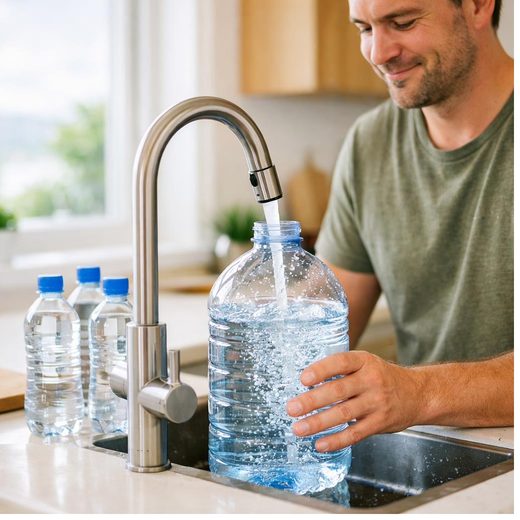
Plan for three litres of water per person per day – for drinking and cooking. For a week that means around 20 litres per person. Store it in clean, sealed containers in a dark, cool place. Replace the water about once a year.
02
Food
Food with a long shelf life
Choose food that can be eaten without preparation or needs little water and energy: canned goods, crispbread, pasta, rice, nuts, dried fruit and spreads. Plan for three meals per person per day. Rotate your stock – eat from it and top it up.
03
Heat & light
Heat and light without power
During a winter power cut, heat quickly becomes critical. Keep candles, matches, a torch, batteries and warm clothing, blankets or sleeping bags at hand. If you have no alternative heating, agree in advance on somewhere to stay.
04
Information
Radio and information
In a crisis, the authorities broadcast on NRK P1. A battery or crank powered DAB radio ensures you receive important messages even when power and mobile networks are down. Also keep a power bank and cash in small notes.
05
Health
First aid and medicines
Keep a first aid kit, iodine tablets for children and adults under 40, pregnant and breastfeeding people (only to be taken when advised by authorities) and any medicines you depend on. Check expiry dates regularly – for example when you change your smoke alarm battery on 1 December.
06
Hygiene
Hygiene
Good hygiene prevents illness when the water is off. Keep wet wipes, hand sanitiser, toilet paper, disposable gloves, soap, toothpaste, nappies and sanitary products in your stock.
How much do you need?
The calculator works out the quantities for your household and makes a shopping list of what is missing.